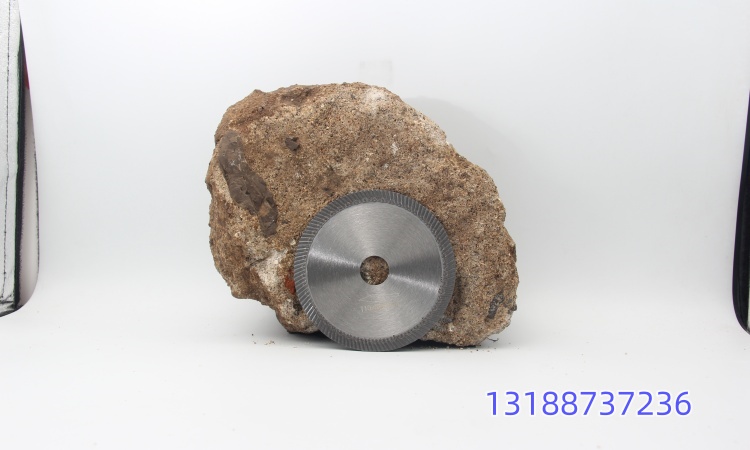
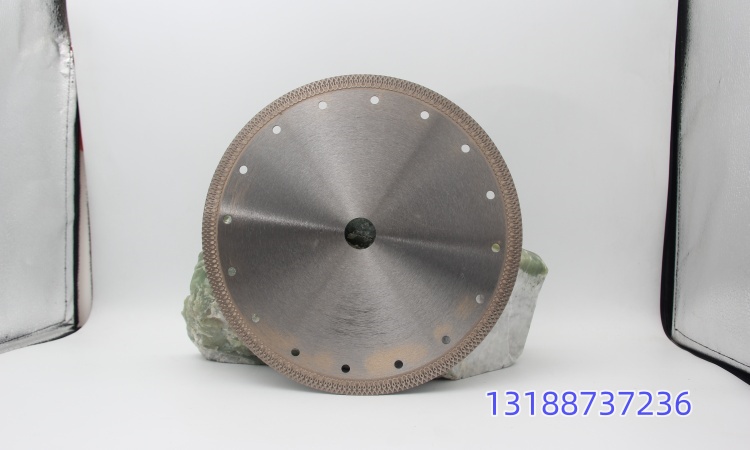
Concrete saw blades are essential tools for demolition, road cutting, and renovation work. Many workers tend to use a single blade until it no longer cuts, but this approach reduces efficiency and creates safety risks. Knowing when to replace a concrete saw blade requires checking appearance, performance, and safety together. Here are some practical guidelines.
1. Segment Wear Has Reached the Limit
The segments (teeth) of a concrete saw blade are the main cutting parts. Normally, segments should stand above the steel core. When they wear down to the level of the core—or even below it—cutting efficiency drops sharply. Continuing to use the blade risks the core rubbing directly against the concrete, generating heat and sparks, damaging the machine, and creating hazards. As a rule of thumb, replace the blade when the remaining segment height is less than 2 mm.
Huada Jinke concrete saw blades feature uniform segment height and strong bond retention, making wear progression more predictable and replacement timing easier to judge.
2. Cutting Speed Drops Noticeably
If the same machine, material, and operator suddenly need more push to advance, the blade is probably dull. Dullness can result from worn diamond grit or an unsuitable bond hardness. Forcing the blade forward increases motor load and may burn out the cutter. When speed drops, stop and inspect the segments instead of applying more pressure.
3. Abnormal Vibration or Noise Appears
A new blade runs smoothly and quietly. Periodic vibration, screeching, or clicking sounds can indicate missing segments, a distorted core, or improper flange installation. Vibration damages the machine, causes chipping, and produces crooked cuts. Continuing to use a vibrating blade can lead to blade rupture and serious accidents.
4. Cut Quality Deteriorates
Professional work demands straight, smooth cuts with minimal chipping. If the concrete surface becomes rough, chipped, or blackened from burning, the blade is no longer suitable for the material. Poor cut quality increases rework costs. For projects with strict acceptance standards, replace the blade early.
5. Cracks or Chips Are Visible
Any visible crack, missing tooth, or chip is a clear sign to replace the blade. Even small cracks can spread rapidly under high centrifugal force. Concrete blades often spin at thousands of RPM, and a broken blade at that speed is extremely dangerous. Safety always comes first.
6. How to Extend Concrete Saw Blade Life
Proper replacement is important, but so is extending service life. Prefer wet cutting with adequate coolant; avoid cutting rebar or other extremely hard materials; ensure the flange matches and the nut is evenly tightened; and briefly break in new blades. Huada Jinke hot-pressed concrete blades bond diamond particles tightly to the matrix, delivering more stable life under normal use.
FAQ
How long does a concrete saw blade usually last?
It depends on concrete hardness, presence of rebar, cutting frequency, and cooling conditions. Heavy job-site use may require replacement in weeks, while occasional home use can last months. Quality blades with good maintenance last significantly longer.
Can I sharpen an old concrete blade and keep using it?
Self-sharpening is not recommended. It can damage the segment structure and reduce diamond exposure, accelerating wear and creating safety risks. Once segments are worn down, replacement is the safest choice.
How do I choose a replacement concrete saw blade?
Check four key parameters: diameter matching the saw, bore matching the spindle, segment height, and diamond concentration/grit size. Choose a reputable manufacturer. Shandong Huada Jinke New Materials Co., Ltd. offers concrete blades in various specifications for different working conditions.
About Shandong Huada Jinke New Materials Co., Ltd.
Shandong Huada Jinke New Materials Co., Ltd. is a leading R&D and manufacturing enterprise of diamond saw blades and diamond cutting tools, serving industries such as stone, concrete, ceramics, and metal cutting. The company operates fully automatic hot-press production lines and a complete quality inspection system.
Why Choose Huada Jinke?
- ✅ 20 years of professional diamond saw blade manufacturing experience
- ✅ Fully automatic hot-press production lines for stable quality
- ✅ OEM/ODM customization supported for diverse market needs
- ✅ Strict quality control with inspection for every blade
📞 Contact: 13188737236 (WeChat same number)

Ginkgo
Ginkgo